Lighting intensity and quality: why lux alone does not create good lighting
When designing lighting, people often look for an answer to the question of how much light is needed for a specific space. This need naturally leads to lux - a unit of measurement that defines lighting intensity. However, in higher-end interiors and architectural projects, a single lux value rarely describes the true quality of lighting. Such an approach may be sufficient for technical standards, but it creates neither comfort nor aesthetics.
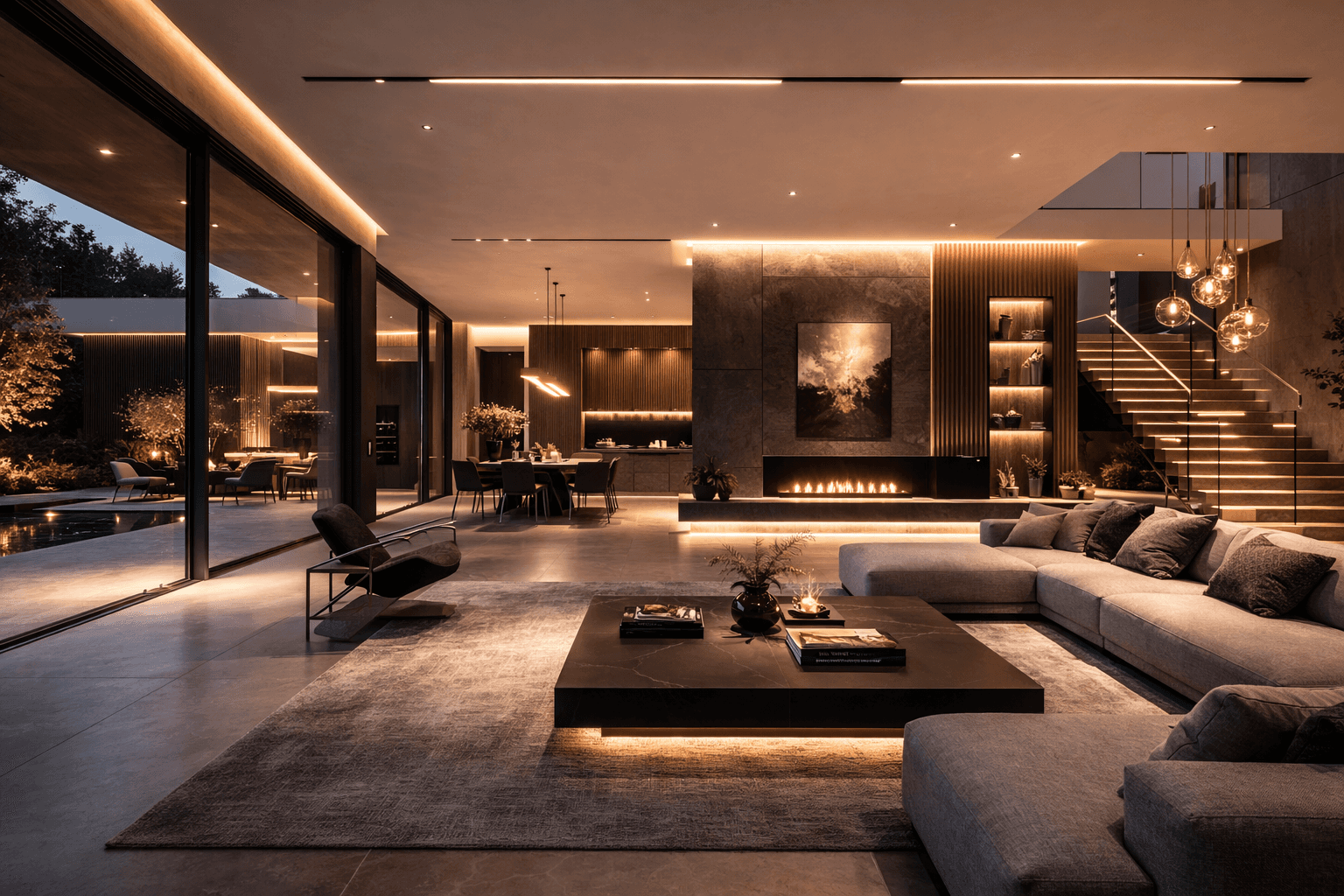
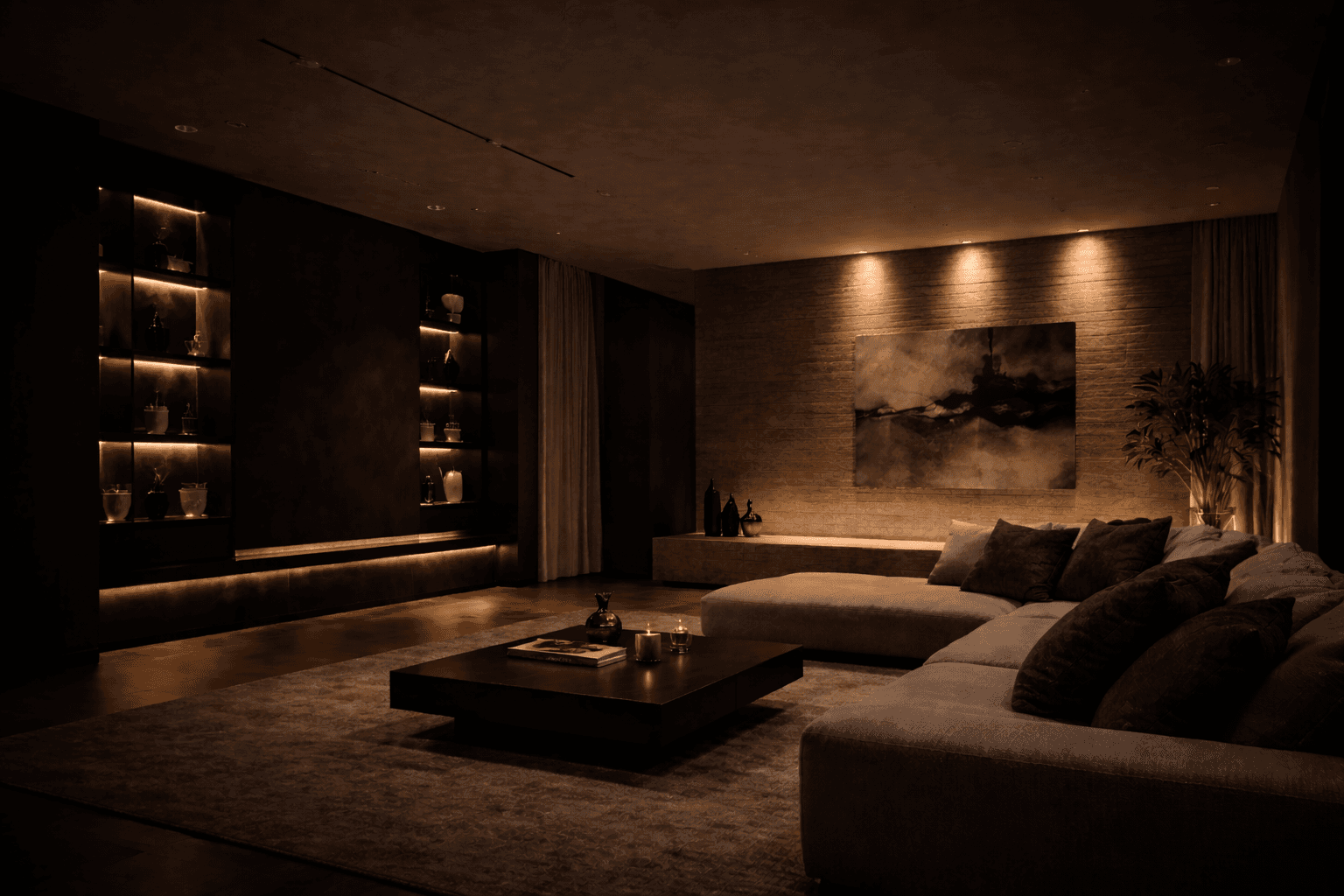
The same amount of lux in different spaces can be perceived completely differently. The feeling of light is determined not only by its amount, but also by its distribution, direction, the surfaces it reflects from, and the overall relationship between light and shadow. A uniformly lit room may look flat and characterless, while directionally planned lighting with a lower overall intensity can create a deeper, visually richer space.
An important aspect is light distribution. Evenly distributed lighting is often used as a safe solution, but it rarely reveals architecture. Directional lighting makes it possible to highlight textures, vertical surfaces, or structural elements, creating a clear visual hierarchy. In this way, light becomes not a background, but an active tool for shaping space.
Equally important is light quality. A high color rendering index ensures that materials and surfaces appear natural rather than distorted. This is especially important in living spaces, where light directly affects the perception of interior quality. Poor-quality light can diminish even premium materials.
Glare is another factor that is often ignored when assessing only lux metrics. Excessive light intensity or improperly chosen light direction can cause discomfort, even if the overall lighting level meets standards. Comfortable lighting requires controlling not only quantity, but also how light enters a person's field of vision.
The balance of light and shadow is also important. Spaces without contrast often appear monotonous. Subtle shadows add depth, emphasize form, and allow architecture to 'breathe'. Therefore, professional lighting design deliberately leaves darker zones that strengthen the overall composition.
Modern LED lighting solutions make it possible to precisely control light intensity, direction, and distribution. However, technology alone does not ensure a good result. Only thoughtful design makes it possible to create a balance between function, aesthetics, and comfort.
When evaluating lighting, it is important to understand that lux is only one of many parameters. It defines quantity, but not quality. In high-end projects, light is evaluated as a whole - its relationship with space, materials, and human perception.
Good lighting does not start with a number. It starts with an understanding of how light affects space.